Swami Kripalu
in America
Over the years, Kripalu’s disciple, Yogi Amrit Desai, invited him to come to the United States to witness the spiritual work being carried out on his guru’s behalf. Each time, Bapuji declined, explaining that he could not interrupt his sadhana.
In 1976, a momentous shift occurred at the Kripalu ashrams when Bapuji unexpectedly accepted Yogi Desai’s invitation. For months leading up to his arrival, ashram residents had been tirelessly preparing for his visit. Yogi Desai traveled back and forth between continents to oversee the arrangements and personally escort him.
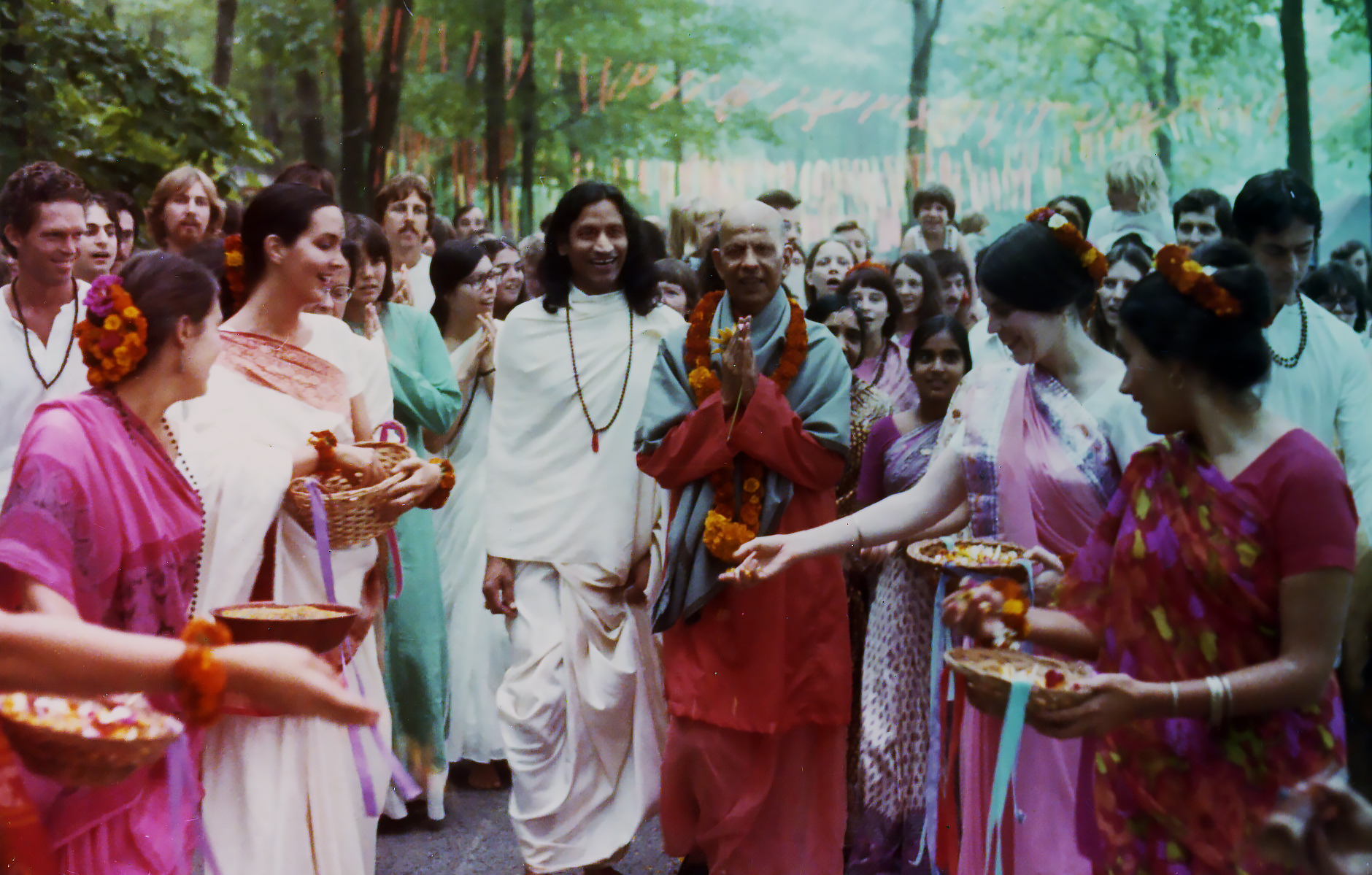
When Bapuji arrived at JFK Airport, he was welcomed in a VIP lounge by a small group of disciples who then accompanied him on the drive back to Pennsylvania. As the caravan approached the ashram, miles of road were lined with disciples dressed in white, waving in welcome to the guru of their guru.
So moved by their devotion, Bapuji broke his many years of near-total silence to speak to the Western seekers, whom he affectionately called his spiritual grandchildren. Turning to Yogi Desai, he said with a knowing smile,
“We have been with these souls before.”
Life at the Ashram
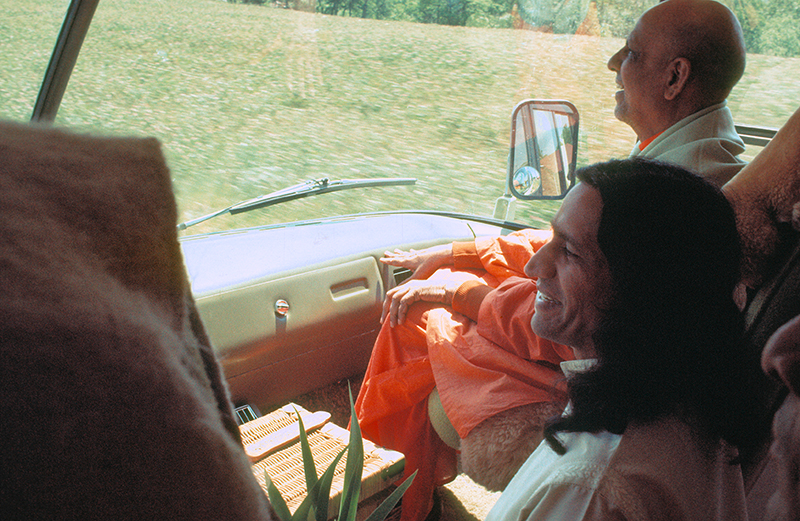
During his time in the United States from 1977 to 1981, Bapuji lived primarily at two locations in Pennsylvania: Muktidham, a small meditation cabin in Sumneytown, and Rajeshvari, a residence prepared for him at Summit Station. Shortly after his arrival, he began offering daily morning darshans at 6 a.m., where he would chant and speak in Gujarati. These sessions were attended by disciples at the ashram and translated into English.
After several months, Bapuji returned to the secluded lifestyle he had maintained in India. He entered an intensive period of personal sadhana, practicing for ten hours each day in silence. Although he no longer appeared publicly on a regular basis, he continued to teach privately to Yogi Desai, Mataji, a small group of close disciples and the Desai children.
A few times each year, Bapuji also emerged for special events such as Guru Purnima and other major occasions. Outside of these select appearances and meetings, his time in the U.S. remained dedicated almost entirely to his spiritual practice.
The Final Chapter
As the years passed, Bapuji continued to extend his stay. However, by 1981, it became clear that his health was beginning to decline. Though no formal announcement was made, it was quietly understood that Bapuji would soon be departing.
On his slate, he wrote:
“I belong to the Lord.”
On September 27, 1981, Bapuji offered his farewell address. Too weak to speak, he asked Yogi Desai to read his written message aloud:
“The sweet dream has come to an end. I have always considered Amrit my own son. During my stay here, he has never displeased me. He has loved me for many years with faith, and I have also loved him deeply. I beg your permission to say farewell.”
With that, Bapuji quietly returned to India, with Yogi Desai at his side for the long journey home.
Discover Kripalu's Legacy